
How to calculate beneficiary entitlements.
Explanation of how beneficiary entitlements are calculated.
Explanation of how beneficiary entitlements are calculated.
.jpg)

A beneficiary's entitlement is the end result of all of the assets, liabilities, transactions and entitlements affecting the estate. To calculate it, you need to know all of the following:
To calculate the beneficiary's entitlement, all of the above must be known, and correctly applied to the beneficiary's entitlement. When done correctly, the total of all beneficiary entitlements at any given time is equal to the net assets of the estate at that time.
At any point in time, the total net assets of the estate ultimately belong to the beneficiaries.
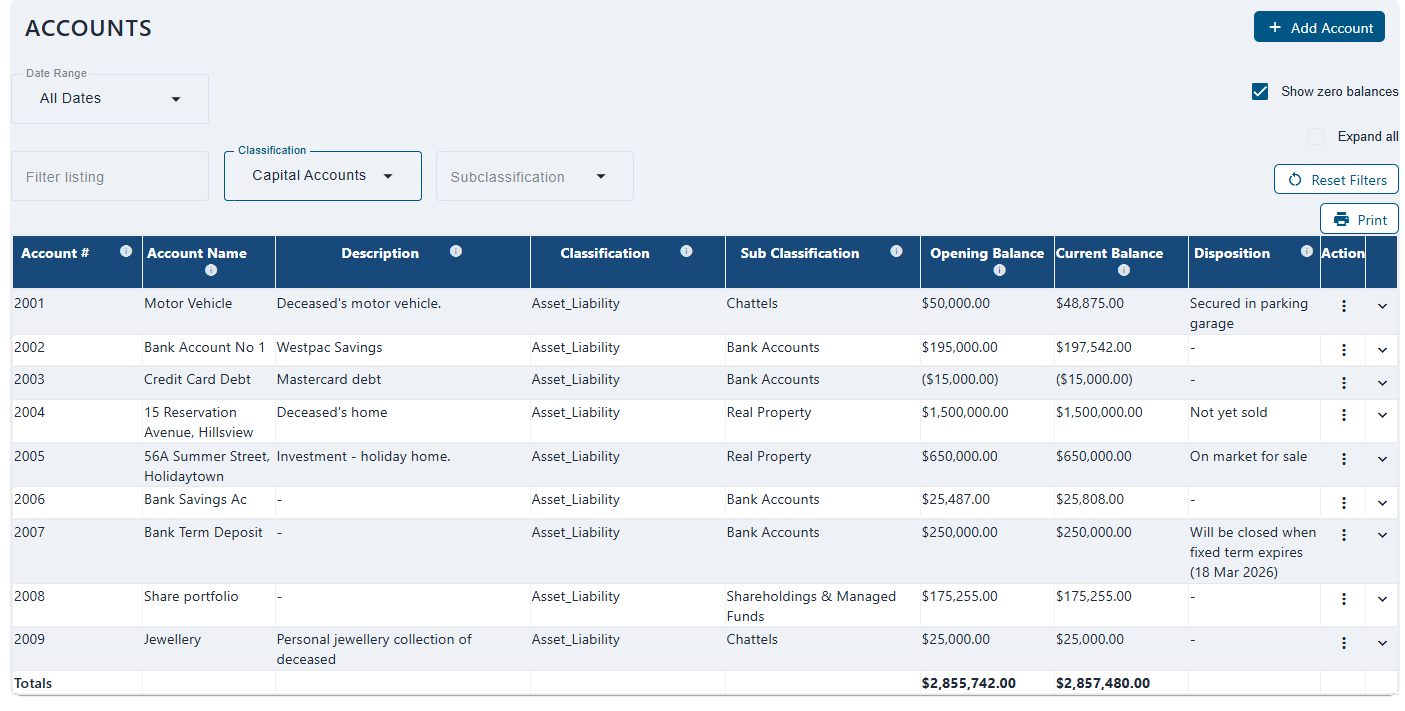
The executor needs an accurate picture of the estate's net assets. Liabilities must be taken into account as well as assets. Values change over time, and any change in value should be recorded and allocated correctly.
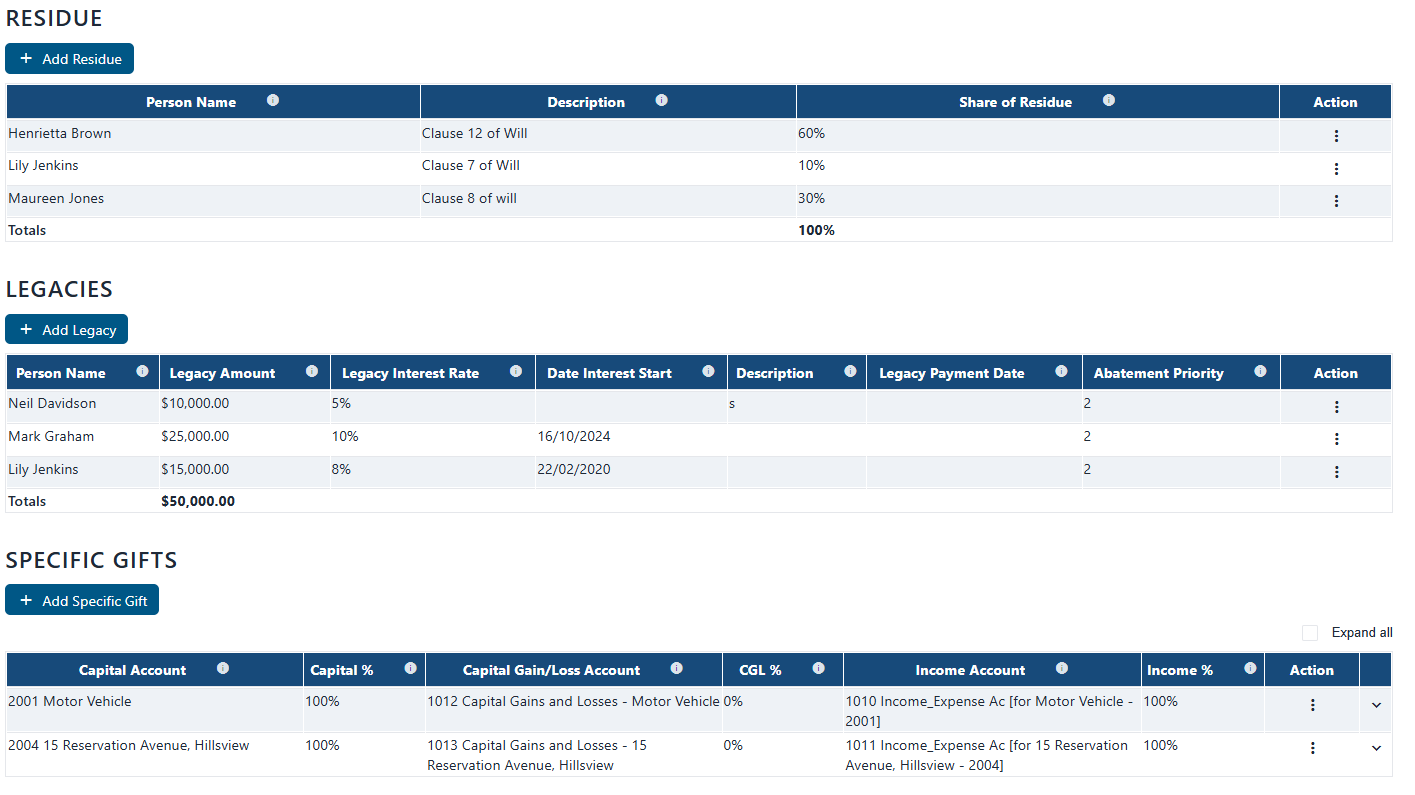
The executor/administrator must record and apply the gifts as specified in the Will. Percentage or fractional entitlements must be applied, and any legacies and specific gifts recorded in favour of the nominated beneficiary.
The beneficiary's entitlement is affected by the costs of the administration and any income (bank interest, share dividends, capital gains) earned by the estate assets. Residuary beneficiaries bear the general costs of administration in proportion to their share of the residue.
When a beneficiary is gifted a specific asset, the income and expenses associated with that asset must be separately identified and allocated to that assets, and the result applied to the beneficiary. Where the gift is allocated to more than one beneficiary, any fractional entitlements must be applied correctly to the income and expenses as well as the underlying gift.
If the estate includes a gift of a life interest, or right to reside, then the life tenant is entitled to the income earned on the gifted asset (and is responsible for the expenses associated with that asset), while the gift-over beneficiary (historically referred to as the 'remainderman') receives the asset after the end of the life tenancy - including any capital gains and less any capital expenditure. All of these entitlements need to be separately allocated to correspond with the beneficiary's legal entitlement.
If there are any overrides within the Will (that is, provisions which override the 'default' allocation of income, expenses or capital sums) then those must be applied, before the final entitlement is determined.
Attestates incorporates all of these elements (and more besides) and allocates all of the income and capital correctly, so that, at every point in time, the total net assets of the estate are 100% allocated to the beneficiaries. Flexibility to handle any Will-made overrides is also built in. The app's algorithms perform all of the calculations to determine the beneficial entitlement of every beneficiary, for any date the user chooses. Instantly.
Once the above steps have been undertaken, then you will have calculated the entitlements of the beneficiaries. As a check - verify that the total beneficiary entitlements add up to the total net estate assets. If all checks out, you are done!
This information should be kept up-to-date. At any time, the Executor should know every beneficiary's entitlement, and how it is made up. Executors need this information when working out whether to make interim distributions and how much can safely be paid without risking an overpayment. Beneficiaries can and do ask for up-to-date statements of their entitlements.
Attestates calculates this information automatically: An executor can simply check the Beneficiaries page, and see every entitlement up-to-date with all calculations performed and the result displayed.
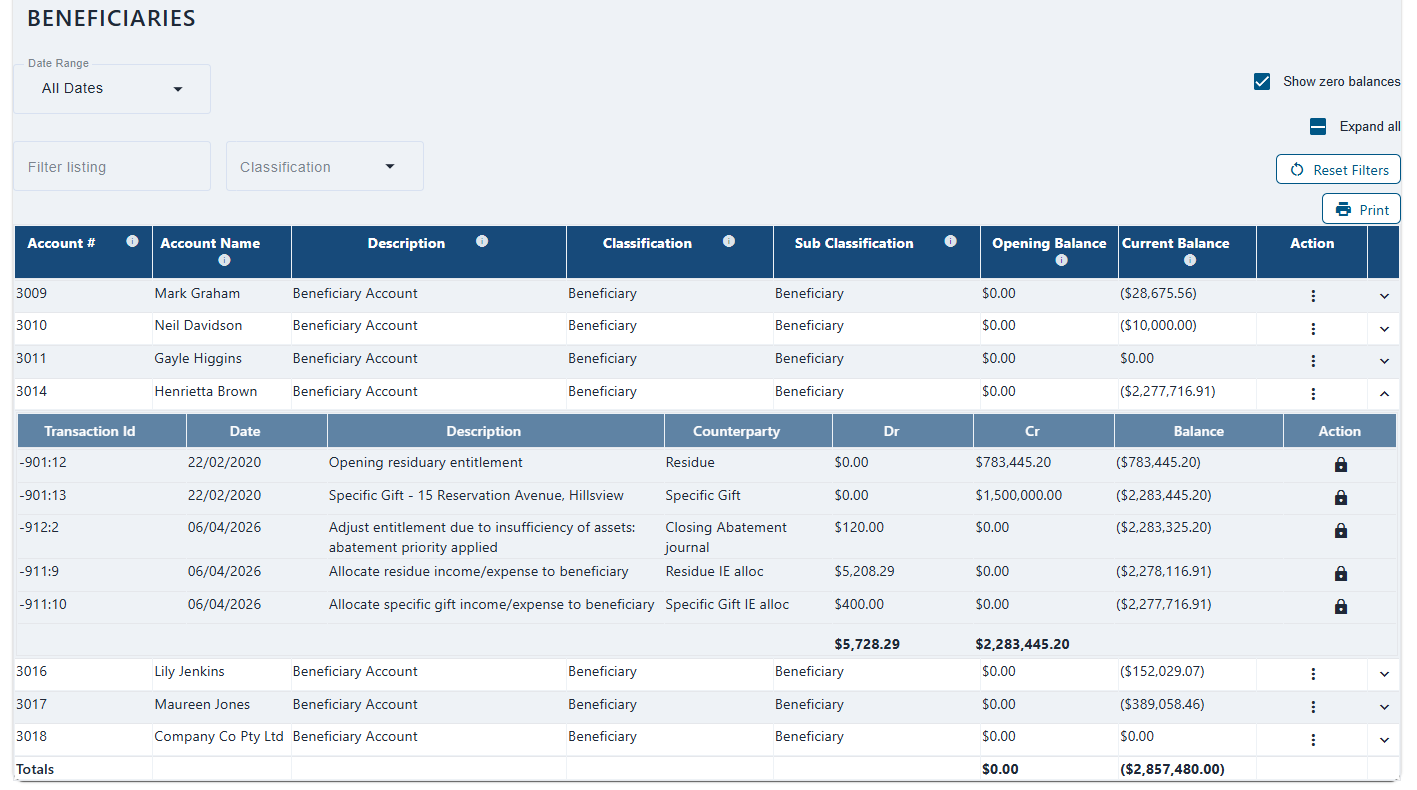
The Executor can see the beneficial entitlement of every beneficiary, and also every component making up each beneficiary's share.
Determining a beneficiary's entitlement involves a complex set of steps and analysis - much more than most people realise. In a well run estate, the information is kept up-to-date and at the executor's fingertips at all times.